What Is Security Risk Analysis? Why Is It Vital for Businesses?
Security risk analysis is not an exercise in purchasing the greatest number of devices; it is the process of determining, based on evidence, which asset must be protected against which threat, to what extent, and with what investment priority.
Businesses often consider security investments after an incident has occurred or when the existing system becomes outdated. Although this approach may solve the visible problem, it can miss the root cause of the risk. Increasing the number of cameras may eliminate a blind spot; however, if it has not been defined who will monitor the alarm, how access records will be audited, or how a critical door will behave during a power outage, the protection chain will still remain weak.
A well-prepared analysis evaluates dependencies related to buildings, processes, people, information, technology, and suppliers within a common framework. The result is not merely a list of risks. It is an actionable roadmap that supports management's budget and timing decisions and identifies responsible parties, completion dates, verification methods, and the residual risk to be accepted.
- Systematic Assessment of Risks
What Is Security Risk Analysis?
Security risk analysis is a risk management process that systematically examines the assets that need to be protected, the threats that may affect those assets, the vulnerabilities those threats may exploit, and the adequacy of existing controls.
Evaluating likelihood and impact together determines priority; residual risk is also recorded after controls have been implemented. This process is part of risk management and is broader than a one-time site survey report.
The scale of the assessment varies by organization. In a small office, entrances, valuable assets, fire, data access, and visitor processes may come to the forefront. In a manufacturing facility, perimeter security, hazardous areas, business continuity, OT networks, and the supply chain may be more critical.

In a multi-branch business, standardized control levels, remote management, maintenance visibility, and comparisons between locations become increasingly important.
Asset Protection
Critical values such as people, buildings, equipment, data, processes, reputation, and service continuity are identified.
Threat Scenarios
Events, actors, methods, and potential consequences that could harm the organization are examined on a scenario basis.
Identification of Vulnerabilities
Blind spots, weak procedures, misconfigurations, and single points of failure are made visible.
Control Effectiveness
The capacity of existing measures to prevent, detect, delay, and enable a response to risk is assessed.
Important distinction: Risk analysis does not promise that “no incident will ever occur.” It makes uncertainty visible, reduces unacceptable risks, and directs limited resources toward the most effective controls.
- Core Components of Risk Management
Key Concepts: Asset, Threat, Vulnerability, and Control
Asset
Anything of value that must be protected, such as people, buildings, equipment, data, processes, reputation, or service continuity.
Threat
An event or actor that may cause harm, such as theft, sabotage, fire, natural disaster, unauthorized access, malware, or human error.
Vulnerability
A blind spot, weak procedure, misconfiguration, lack of training, outdated device, or single point of failure that makes it easier for a threat to have an impact.
Control
A technical, physical, or administrative measure that prevents, deters, detects, or delays risk, enables response, or accelerates recovery.
Impact
The consequence of an incident on life safety, operations, finances, regulatory compliance, the environment, and reputation.
Residual Risk
The risk that remains after existing or planned controls and that must be monitored or accepted by authorized management.
- Security Aligned with Business Objectives
Why Is It Critical for Businesses?
Risk analysis directly links the security budget to business priorities. Rather than applying the same solution to every location, it highlights scenarios and control gaps that could create the greatest impact.
This ensures that the question “which product should we buy?” is preceded by “which risk should we reduce, and to what level?” This order reduces unnecessary capacity and disconnected systems.
- Prioritization for life safety and critical business processes
- Planning security investments according to their risk-reduction impact
- A shared language between physical security, IT, operations, and human resources
- Visibility into the coverage, performance, and operational weaknesses of existing controls
- Sorumlu, tarih ve doğrulama ölçütü içeren iyileştirme yol haritası
- Traceable documentation of the residual risk accepted by management
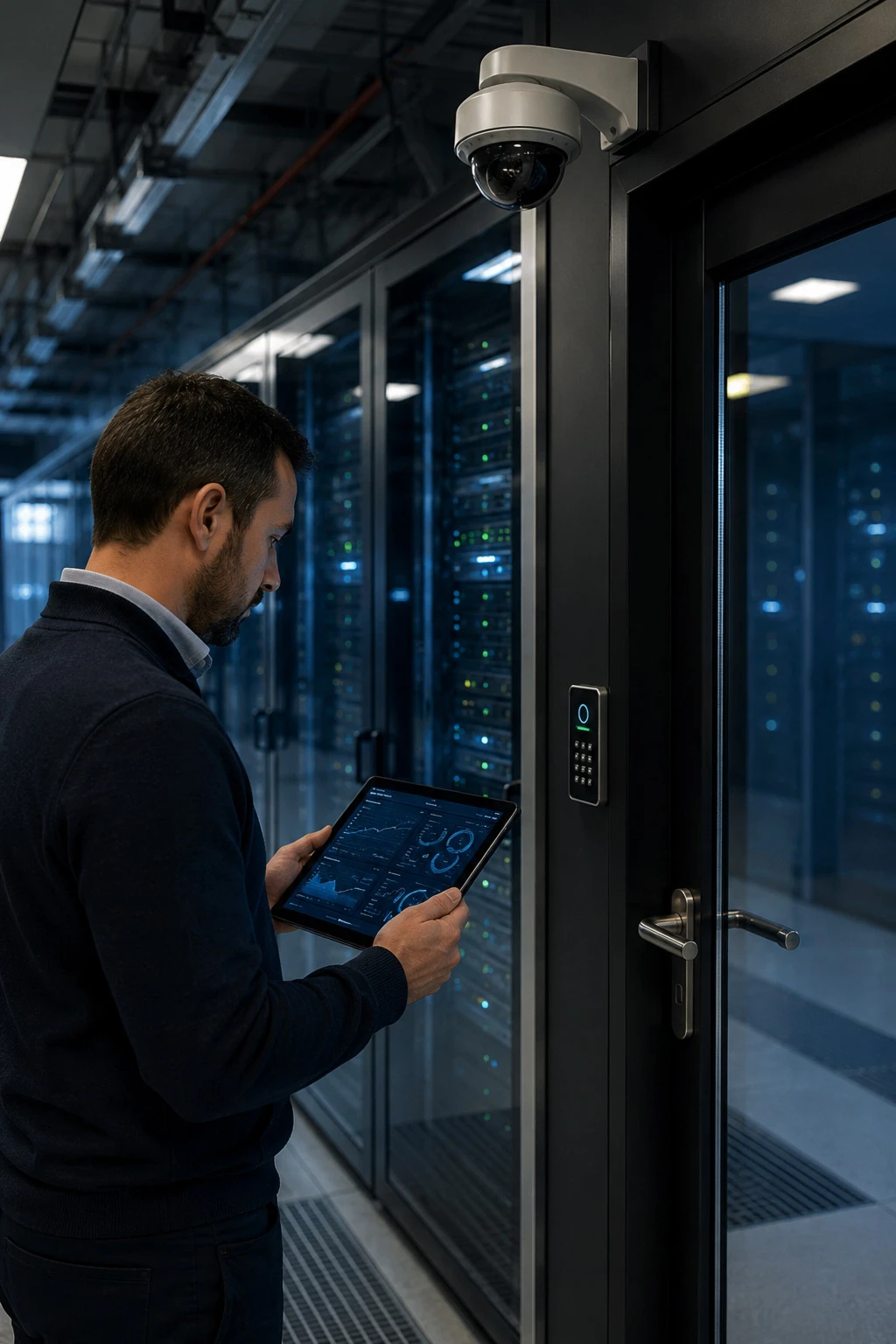
The same assessment also strengthens business continuity. Points where critical processes depend on a single person, network, power line, or supplier become visible.
Defining emergency roles, alternative communication methods, and recovery priorities reduces the need for improvised decision-making during an incident. Evidence required for audits, insurance, and contractual processes is also produced more systematically.
- Integrated Assessment Areas
What Areas Does Security Risk Analysis Cover?
The scope is determined according to the organization's objectives and field of activity. Treating physical security and cybersecurity as completely separate areas is becoming increasingly less meaningful; network-connected cameras, access control panels, intercoms, fire systems, and building automation lie at the intersection of both domains.
Nevertheless, responsibility and expertise boundaries must remain clear, and each risk must be verified by the appropriate team.
Physical Security
The perimeter, building envelope, doors, critical rooms, visitor and vehicle entrances, lighting, and key management are assessed.
Electronic Security
CCTV, video management, access control, intrusion detection, intercoms, alarm monitoring, and system health are examined.
Cybersecurity
Asset inventory, identity and access management, network segmentation, updates, logging, backups, remote access, and incident response are assessed.
Operations and People
Segregation of duties, shifts, training, alarm procedures, contractor and visitor processes, and social engineering risks are examined.
Business Continuity
Power, communications, backup systems, disaster recovery, supplier dependency, and critical service recovery are assessed.
Regulatory and Contractual Requirements
Personal data, record retention, industry obligations, customer commitments, and evidence management are taken into account.
- Step-by-Step Implementation Process
How Is Security Risk Analysis Conducted?
Define the Objective and Scope
Define the locations, business processes, assumptions, exclusions, stakeholders, and decision-making authority.
Create an Asset and Process Inventory
Record what must be protected, its owner, dependencies, and the acceptable downtime in the event of disruption.
Develop Threat Scenarios
Instead of using a generic threat list, ask: “Who could affect what, by which method, and with what resulting consequence?”
Examine Vulnerabilities and Controls
Compare the design with actual implementation through site observations, document reviews, user interviews, record sampling, and appropriate technical tests.
Assess Likelihood and Impact
Define scoring criteria in advance; consider impacts on life safety, operations, cost, regulatory compliance, and reputation separately.
Develop Control Options
Evaluate options to avoid, reduce, share, or accept risk together with their cost, feasibility, and side effects.
Present the Action Plan to Management
Define an owner, target date, resource requirement, priority, and evidence of completion for each action.
Verify and Monitor
When a control is implemented, retest the scenario, update the residual risk, and establish a periodic review schedule.

How Should a Risk Matrix Be Used?
A likelihood-impact matrix is practical for comparing risks on a common scale; however, it does not produce a definitive result on its own. When levels such as “low, medium, and high” are not clearly defined, different teams may assign different scores to the same scenario.
Rare but catastrophic events, interdependent risks, and uncertain data may appear less significant than they actually are when a simple multiplication method is used.
For this reason, the scenario description, data source, control effectiveness, uncertainty, and worst reasonable outcome should also be recorded alongside the matrix.
Quantitative analysis may be used when sufficient cost or downtime data is available; when data is limited, qualitative assessment should be supported by expert judgment and field evidence. The score is not the decision itself; it is a tool that facilitates discussion and prioritization.
- Data-Driven Decision Support
The Role of Artificial Intelligence and Data Analytics
Artificial intelligence does not replace risk analysis; it provides decision support by identifying patterns that may otherwise be overlooked and classifying large volumes of data.
When video events, access logs, failure history, maintenance records, and alarm density are examined together, recurring problems may be identified at specific locations, times, or device groups. Text analysis can also help classify common causes in incident reports.
The reliability of model output depends on data quality. Missing records, incorrect timestamps, changing site conditions, or historical bias may lead to misleading recommendations.
For this reason, data sources and model limitations must be documented, critical findings must be verified by experts, and automated scoring must not replace management approval.
- Manageable and Verifiable Outputs
What Should a Professional Risk Analysis Report Include?
- Executive summary, objective, scope, methodology, assumptions, and limitations
- Inventory of assets, processes, locations, and critical dependencies
- Scenario-based risk register and the scoring criteria used
- Design and operational effectiveness of existing controls
- Verifiable findings such as photographs, plans, records, or test results
- Priority actions, responsible parties, timelines, and estimated resource requirements
- Target risk level, residual risk, and management approval
- Reassessment date and performance indicators
- Approaches That Reduce the Effectiveness of the Analysis
Common Mistakes
Mistaking a Product List for an Analysis
A device list prepared without developing risk scenarios may lead to unnecessary investment or critical gaps.
Focusing Only on the Visible Vulnerability
Alarm monitoring, user authorization, maintenance, cybersecurity, and response procedures are all parts of the same protection chain.
Assigning the Same Score to Every Location
Asset value, environment, operating hours, threat profile, and business impact may vary by location.
Failing to Assign a Risk Owner
Sorumlusu ve tarihi olmayan öneriler raporda kalır; teknik ekip ile iş biriminin rolü ayrıştırılmalıdır.
Closing an Item Without Verifying the Control
The fact that a device has been installed does not mean the scenario has been resolved; performance and process must be tested together.
Failing to Update the Analysis
A new building, process, threat, supplier, regulation, or technology may invalidate previous assumptions.
When Should Risk Analysis Be Renewed?
The periodic review interval is determined according to the risk level and industry requirements.
In addition, opening a new location, modifying a building or production line, a merger, changing a critical supplier, a security incident, new threat intelligence, regulatory changes, or a major technology transformation should trigger an interim assessment.
The closure of high-risk actions should also be verified without waiting for the next annual cycle.
- Actionable Security Roadmap
iTech Project's Security Risk Analysis Approach
iTech Project addresses site security, electronic systems, network connections, operational processes, and business continuity through common scenarios.
Not only the technical capacity of the existing infrastructure, but also its daily use and maintenance status are examined.
Findings are phased into quick wins, medium-term improvements, and strategic investments, then transformed into an actionable roadmap.
Free Consultation- Make Your Risk Visible
Plan Your Security Investments with the Right Priorities
Plan a site survey and risk analysis with iTech Project to assess a new investment, a facility change, or the effectiveness of your existing security systems.
Frequently Asked Questions
No. A site survey helps understand the existing area and infrastructure. Risk analysis links assets, threats, vulnerabilities, impacts, and controls to business objectives in order to establish priorities and identify residual risk.
The security team may coordinate the process. However, participation from IT, operations, facilities, human resources, legal, occupational health and safety, and relevant business units improves the accuracy of the scope.
It may reduce certain risks when supported by correct placement and an effective response process. However, blind spots, recording quality, alarm monitoring, authorization, network, and maintenance vulnerabilities must also be assessed.
Most risks cannot be completely eliminated. The objective is to reduce risk to the acceptable level defined by the organization and to monitor the residual risk with the knowledge and approval of authorized management.
The action owner and evidence of completion are tracked. Site testing or scenario exercises are conducted for critical controls, and the risk register is updated according to the new results.