Access Control Systems
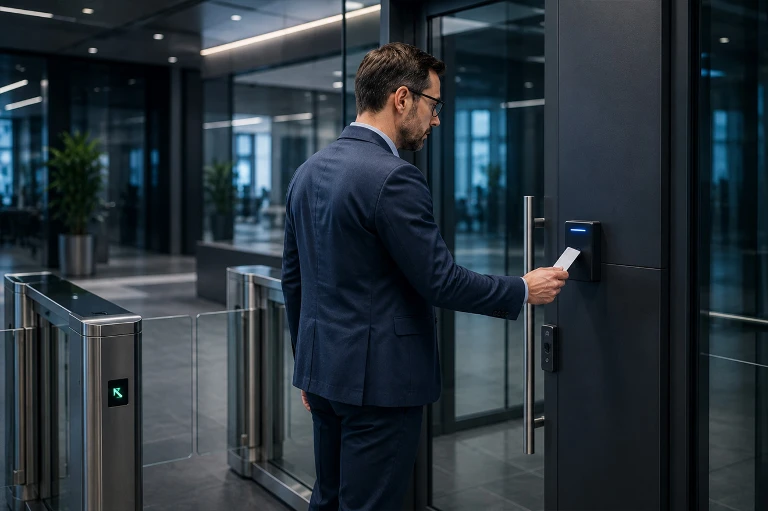
Ensure the right person has access to the right area at the right time with complete auditability.
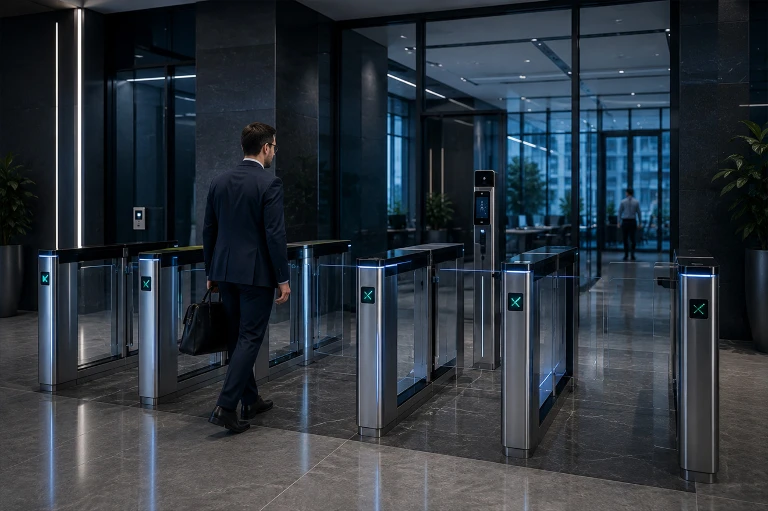
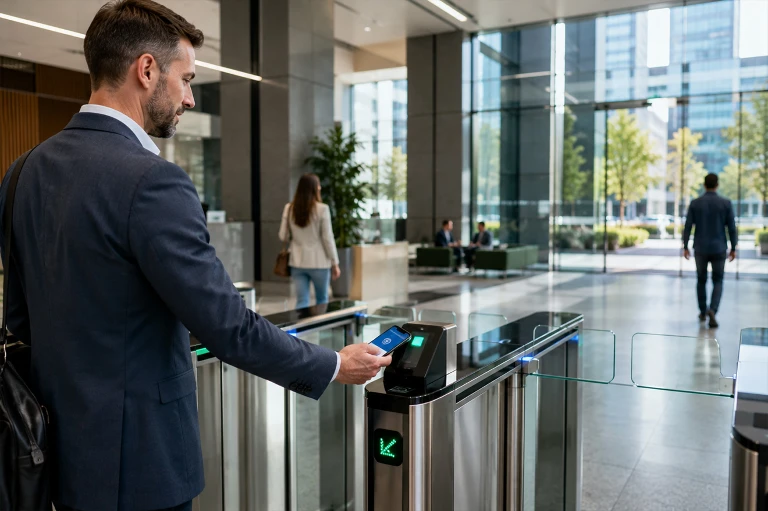
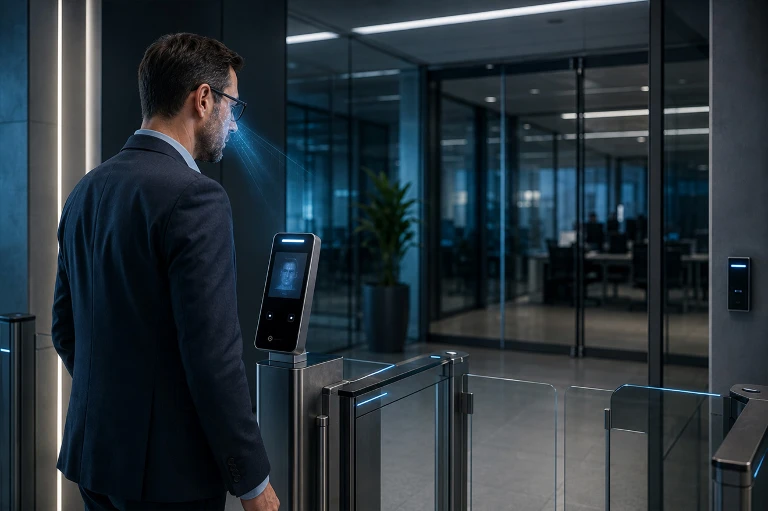
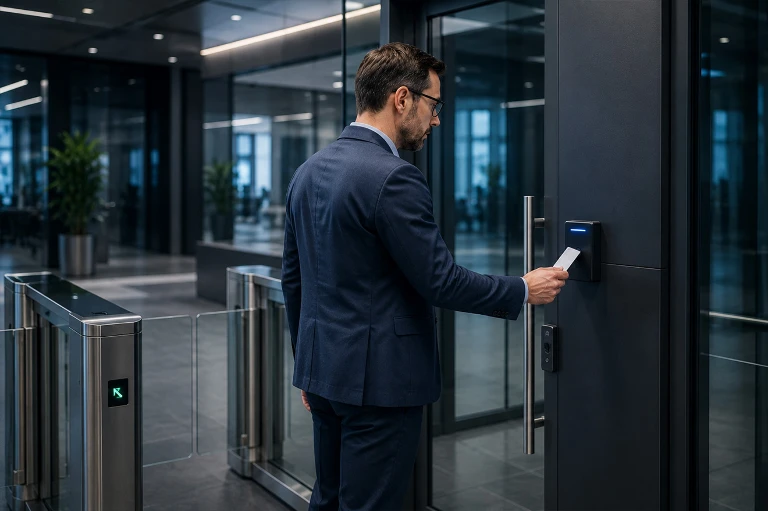
We integrate card based, mobile, and biometric authentication with turnstiles, doors, elevators, parking access, and visitor management into a single centralized management platform.
iTech Project designs scalable access control systems by evaluating user profiles, access risks, door hardware, life safety requirements, data policies, network infrastructure, and integration needs as a whole. Solutions can be adapted from a single office to multiple locations, and from standard employee access to critical-area security.
Core design principle: Access security is more than selecting a card reader. Identity, access rights, door status, alarms, emergency egress, and audit logs must all be addressed within a single end-to-end scenario.
What Is an Access Control System?
An access control system verifies user identity using a card, mobile credential, PIN, or biometric authentication, then manages access through doors, turnstiles, elevators, or vehicle barriers based on predefined time schedules and access permissions. All access grants, denials, forced door events, and system activities can be recorded in centralized management software.
Integration with Security and Business Systems
Through supported APIs, SDKs, and device profiles, an access control system can unify physical security and enterprise business processes within a shared event workflow. The scope of integration is verified according to product compatibility and licensing.
- Video verification linked to card events through CCTV/VMS
- Intrusion detection, intercom, and alarm management
- Fire detection integration and controlled emergency door release
- Human resources, directory services, workforce attendance systems, and shift management
- Visitor management, parking, elevators, BMS, and building management systems
Open Architecture and Reader Security
In multi-vendor projects, open standards and validated integration reduce the risks associated with future expansion and modernization. Where supported, ONVIF access control profiles, APIs/SDKs, and secure bidirectional communication protocols between readers and controllers can be implemented.
- Verification of device, client, profile, firmware, and license compatibility
- Encrypted reader communication using OSDP Secure Channel on supported systems
- Controlled migration from legacy Wiegand interfaces with cabling assessment
- Pilot deployment, fault scenario testing, and integration acceptance testing
Compatibility note: A device supporting OSDP, ONVIF, or APIs does not automatically guarantee interoperability across all functions. Secure modes, profiles, supported features, and key management must be verified on a project-by-project basis.
- Our Differentiated Approach
Why iTech Project?
iTech Project views access security not merely as device procurement, but as a comprehensive system encompassing identity management, physical access, software, integration, cybersecurity, and data governance.
Through vendor independent evaluation and scenario based testing, we deliver practical, scalable solutions that adapt to evolving security requirements.
Infrastructure Modernization
We modernize your existing access control infrastructure while protecting previous investments and introducing current technologies in a controlled manner.
Unified Access Architecture
We bring together card based, mobile, biometric, and vehicle access systems within a centrally managed unified architecture.
Controlled Integration
We securely integrate access control infrastructure with VMS, fire detection, human resources, and building management systems.
End to End Project Management
We manage the entire process, from site surveys and requirements analysis through system design, implementation, testing, and final acceptance.
Let's design your access security solution together, whether you require a new access control system, multi site management, or modernization of your existing card access infrastructure.

Open Architecture and Reader Security
In multi-vendor projects, open standards and validated integration reduce the risks associated with future expansion and modernization. Where supported, ONVIF access control profiles, APIs/SDKs, and secure bidirectional communication protocols between readers and controllers can be implemented.
- Verification of device, client, profile, firmware, and license compatibility
- Encrypted reader communication using OSDP Secure Channel on supported systems
- Controlled migration from legacy Wiegand interfaces with cabling assessment
- Pilot deployment, fault scenario testing, and integration acceptance testing
Compatibility note: A device supporting OSDP, ONVIF, or APIs does not automatically guarantee interoperability across all functions. Secure modes, profiles, supported features, and key management must be verified on a project-by-project basis.
Cybersecurity and Data Governance
An access control infrastructure generates sensitive information such as identities, permissions, movement records, and door status. The system should be designed in alignment with the organization's cybersecurity strategy and personal data protection policies.
- Role-based administration following the principle of least privilege
- Strong administrator authentication and comprehensive audit logging
- Network segmentation, secure remote access, and encrypted communications
- Lifecycle management for controllers, readers, servers, and software updates
- Backup, retention, deletion, and incident response procedures
Application Areas
Offices, business towers, and multi tenant commercial buildings, factories, warehouses, logistics centers, and critical production facilities, hospitals, hotels, campuses, and educational institutions, data centers, banks, laboratories, and high-security facilities, retail chains, stores, and employee only areas, parking facilities, residential communities, apartment complexes, and multi-site organizations.
Frequently Asked Questions
A lost access card or credential should be immediately deactivated through the centralized management software, and the relevant access records should be reviewed. A temporary or replacement access credential may then be assigned to the user. For critical areas, loss reporting and identity verification procedures should be applied together.
This depends on the mobile access technology, reader, controller, and the organization’s security policy. Some solutions do not require an internet connection at the time of access, while connectivity may be required for credential enrollment, revocation, or data synchronization. System behavior should be validated through pilot implementations.
No. Depending on security requirements, smart cards, mobile credentials, PINs, or multi-factor access solutions that combine these methods may be preferred. Biometric authentication should be considered together with alternative methods only when it is necessary, proportionate, and compliant with applicable legal requirements.
Door behavior during a fire is determined according to the door’s emergency egress function, the type of locking hardware used, the fire response scenario, and applicable regulations. Controlled release, safe evacuation, and accurate event logging should be verified together during commissioning and periodic testing.
Yes. A phased modernization plan can be implemented after assessing the card technology, readers, controllers, cabling, electronic locks, user database, and existing integrations. By carefully planning a transition period in which legacy and new access credentials operate together, uninterrupted operations can be maintained.