Fire Detection and Alarm System
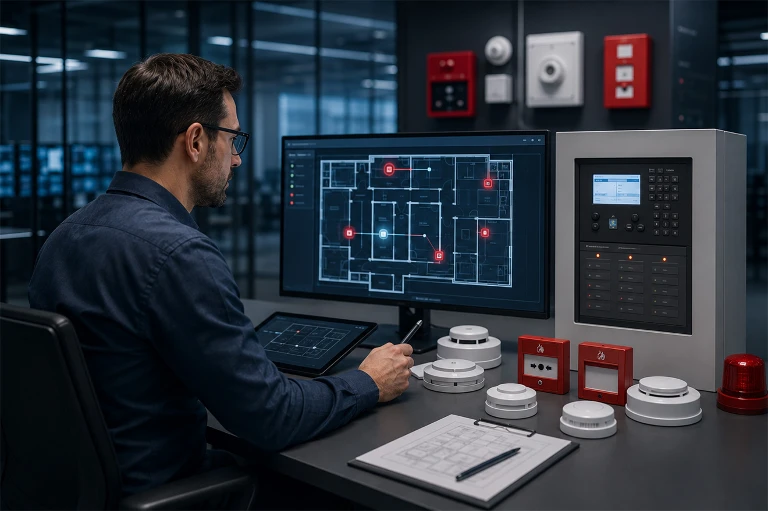
Early detection, accurate alarm management, and integrated emergency response scenarios.
We design end to end fire detection solutions that identify fire risks at the earliest possible stage, quickly pinpoint the source of an alarm, and support evacuation and emergency response processes.
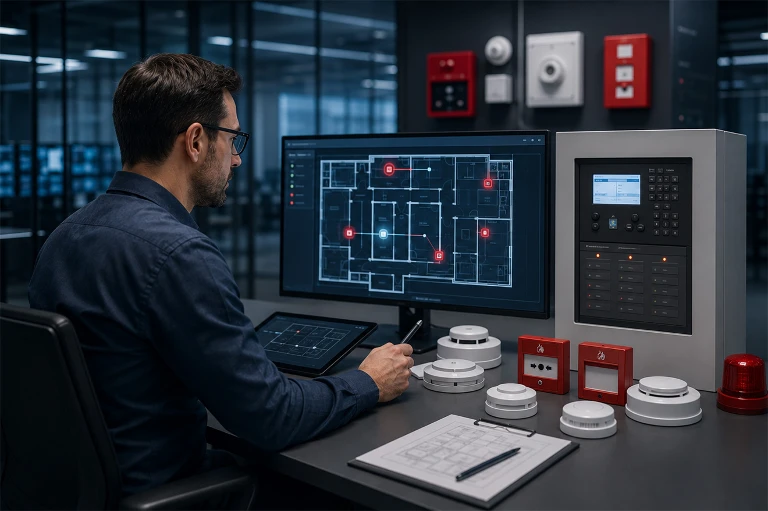
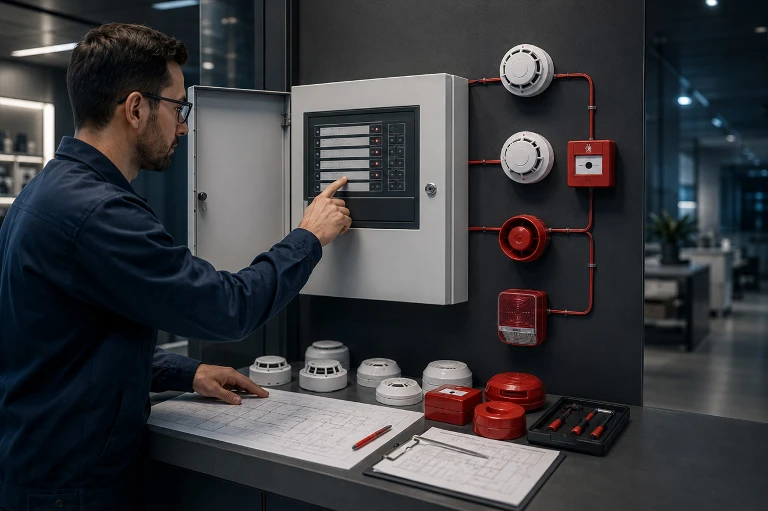
iTech Project develops addressable, conventional, and specialized fire detection and alarm systems by analyzing building type, occupancy levels, environmental conditions, and operational risks. Solutions include field components such as detectors, manual call points, control panels, sirens, and visual alarm devices, as well as alarm monitoring, event logging, system integration, and maintenance processes.
Engineering approach: Every system is designed in accordance with applicable regulations, relevant EN 54 standards, project specifications, and the actual risk profile of the facility.
- Engineering Approach to Fire Safety
Why iTech Project?
Rather than following a single product or single brand approach, iTech Project works with a needs based engineering model. By evaluating existing infrastructure, operational processes, and future growth plans together, it creates practical, scalable, and manageable system architectures.
Vendor Independent Product and System Evaluation
Integrated Design with Electronic Security and Building Automation Systems
End to End Project Management from Site Survey to Commissioning
Documentation, User Training, and Sustainable Maintenance Approach
Let's plan your fire safety project together. Contact iTech Project for an assessment of your existing infrastructure, a new system design, or integration requirements.

Special Detection Technologies
Advanced and Specialized Detection Solutions
Risk-specific detection technologies are used in environments where standard smoke and heat detectors are insufficient or where environmental conditions may cause unwanted alarms.
Multi Criteria and Intelligent Detectors
Multi criteria detectors that evaluate multiple inputs such as smoke, heat, and, where required, carbon monoxide help interpret fire indicators more reliably. Intelligent signal processing algorithms can improve the ability to distinguish real fire conditions from misleading environmental influences such as steam, dust, or exhaust fumes.
Aspirating Smoke Detection Systems
Aspirating systems continuously sample air through a pipe network from the protected area, enabling the detection of very low smoke concentrations at an early stage. They are commonly preferred in data centers, clean rooms, telecommunications rooms, electrical panels, high airflow environments, energy storage facilities, and other locations where business continuity is critical.
Beam Smoke and Flame Detectors
Beam smoke detectors are suitable for long-range detection in large spaces such as warehouses, hangars, atriums, and buildings with high ceilings. Flame detectors are designed for industrial environments where rapidly developing liquid or gas fire risks exist, based on appropriate line of sight and environmental analysis.
Integrated Alarm and Emergency Response Scenarios
A fire detection system should not be regarded merely as a standalone alarm panel, but as a central component of emergency management. Depending on project requirements, controlled integration can be established with the following systems:
- Voice alarm and emergency public address systems
- Elevator recall and designated safe floor scenarios
- Smoke control, ventilation, and HVAC automation systems
- Access control and emergency exit door release systems
- Gas suppression, sprinkler monitoring, and other fire protection systems
- BMS/SCADA, centralized monitoring, VMS, and CCTV alarm verification scenarios
Cameras or AI powered video analytics can support alarm verification and incident management, but they do not replace a certified fire detection system. Integrations should be designed to preserve fire safety functions and ensure predictable behavior under fault conditions.
Application Areas
Offices, retail stores, and commercial buildings, hotels, hospitals, educational facilities and campuses, factories, manufacturing plants, and logistics centers, warehouses, hangars, and high-ceiling spaces, data centers, telecommunications rooms, and clean rooms, energy facilities, critical infrastructure, and special risk environments.
Frequently Asked Questions
Addressable systems can show in detail which device and location generated the alarm. Conventional systems, on the other hand, report alarm information by zone. Addressable systems may be preferred for large, complex, or future-expandable buildings, while correctly designed conventional systems may be suitable for more limited areas.
Aspirating smoke detection systems can be used in data centers, clean rooms, energy storage areas, electrical panels, cabinets, and critical spaces with high airflow where very early warning is required. These systems continuously sample air through a pipe network, helping to detect low concentrations of smoke at an early stage.
Yes. By using suitable interfaces and cause-and-effect scenarios, the fire alarm system can be integrated with emergency public address, access control, CCTV/VMS, building automation, HVAC, and fire suppression systems. The final scenarios should be designed according to the building’s intended use, project requirements, and applicable regulations.
To reduce unwanted alarms, the correct detector technology should be selected, device placement should be planned according to environmental conditions, sensitivity settings should be configured appropriately, and regular maintenance should be performed. Multi-criteria detection solutions may be considered in areas exposed to steam, dust, exhaust fumes, or strong air movement.
Regular maintenance and testing should be carried out to verify that detectors, the control panel, batteries, alarm devices, and system integrations remain operational. Maintenance frequency should be planned in accordance with applicable regulations, relevant standards, manufacturer instructions, and the facility’s risk profile.