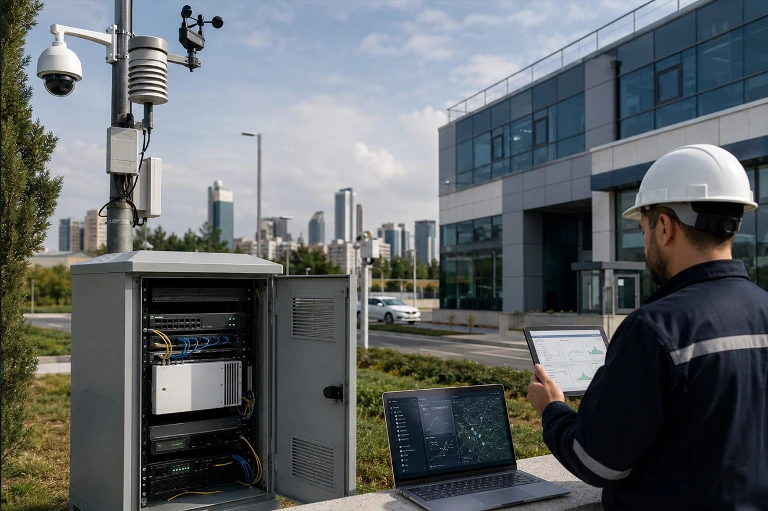
Smart City and Critical Infrastructure Solutions
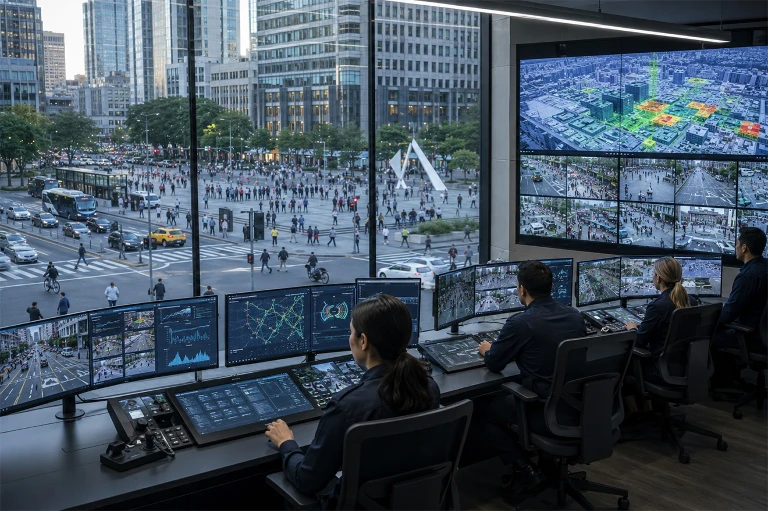
Safe, resilient, and data driven urban operations.
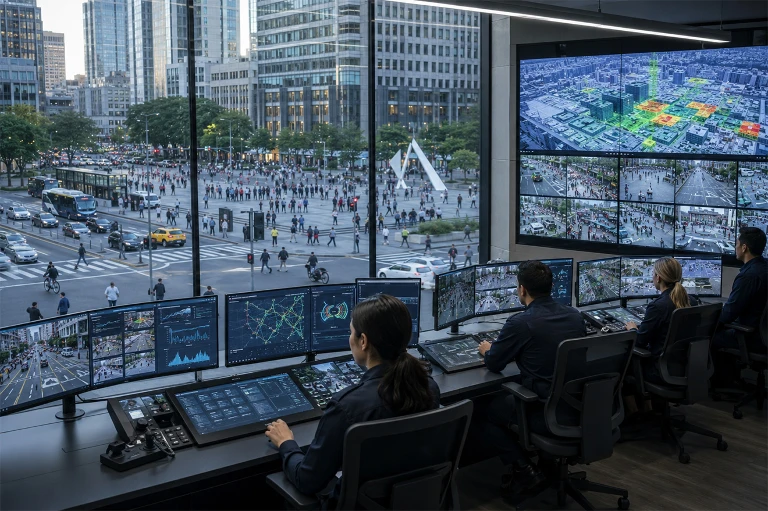
By bringing camera systems, IoT sensors, geographic information, alarms, and operational data together within a shared architecture, we strengthen the visibility, coordination, and continuity of city services and critical facilities.
iTech Project addresses security technologies, information technology, and operational technology layers together in municipal, energy, water, transportation, port, industrial, campus, and logistics projects. Solutions are implemented through a scalable roadmap that preserves existing systems, supports open integration, and places cybersecurity and privacy at the beginning of the design process.
Smart city principle: Technology alone does not make a city smart. Investments should be linked to social benefit, service quality, resilience, operational capacity, and measurable performance indicators.
What Is a Smart City and Critical Infrastructure Solution?
A smart city solution is an integrated set of cyber physical systems that brings physical assets, sensors, communication networks, data platforms, and human decision making together around common service objectives. A critical infrastructure solution protects both security and operational continuity in services such as energy, water, transportation, communications, and production, where disruption may have a significant impact.
- Smart City and Critical Infrastructure Engineering
Why iTech Project?
iTech Project brings security technologies, artificial intelligence, IoT, networking, data, and field engineering together within a unified systems approach.
It makes interoperability requirements at city scale and continuity requirements in critical infrastructure traceable from design through acceptance testing.
Technology Independent Design
We create needs based and technology-independent system architectures beginning with use case and risk analysis.
Open and Phased Architecture
We design infrastructures that protect existing investments, interoperate with different systems, and can be expanded gradually according to evolving needs.
Integrated Security Approach
We combine physical security, OT and IT cybersecurity, and data governance requirements under a unified systems approach.
Measurable Life Cycle Management
We support the long term efficiency of systems through pilot implementations, measurable acceptance criteria, and life-cycle performance monitoring.
Make your city and critical infrastructure operations more resilient. Contact iTech Project for a smart city roadmap, an integrated operations center, critical facility security, or OT/IoT modernization.
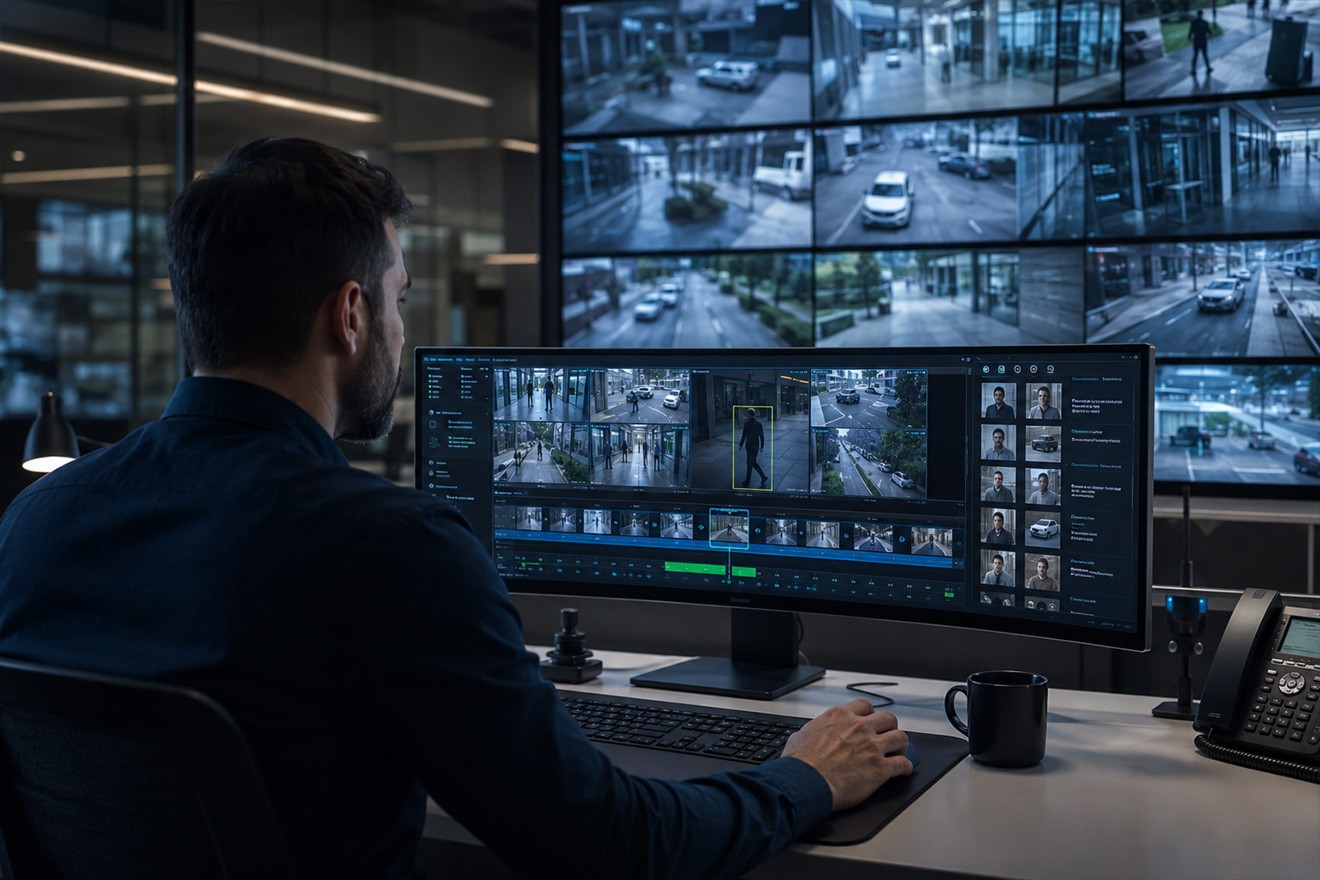
Data Governance, Personal Data Protection, and Artificial Intelligence
City and critical infrastructure data is managed through rules governing purpose, ownership, quality, retention, access, sharing, and deletion. For scenarios involving cameras, license plates, location, or biometric data, legal basis, proportionality, disclosure obligations, access security, and less intrusive alternatives should be evaluated before the project begins.
Decision support principle: Artificial intelligence outputs should not be treated as absolute truth or as automatic enforcement decisions. Critical decisions should be managed through human oversight, explainable business rules, record-keeping, and objection/review mechanisms.
Sector Specific Security Applications
Sector Specific Solutions
Energy Facilities and Industrial Plants
At power plants, substations, renewable energy sites, factories, and process facilities, perimeter security and business continuity are addressed together. CCTV, thermal cameras, radar, access control, and alarm systems are associated with controlled areas, critical equipment, and site procedures.
- Perimeter breaches, unauthorized access, and critical zone alarm verification
- Temperature trend and abnormal condition alerts on compatible equipment
- Decision support for personal protective equipment and occupational safety scenarios
- Traceability of shift, contractor, and visitor access
Water and Wastewater Infrastructure
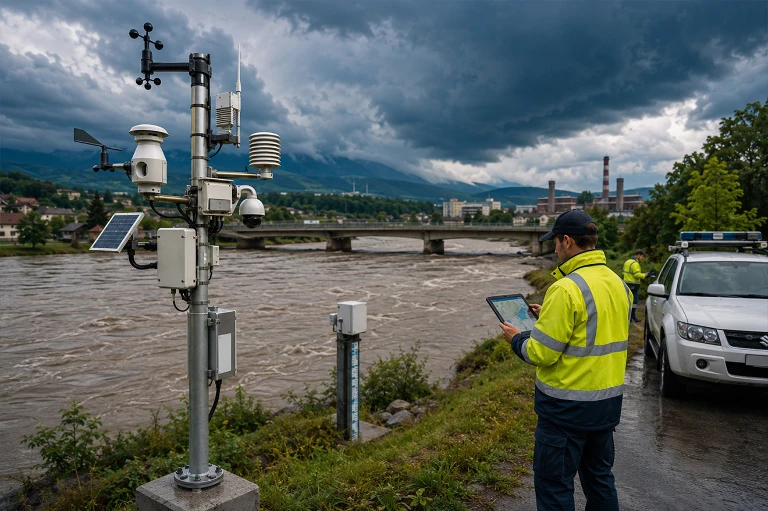
At treatment plants, reservoirs, pumping stations, and remote field locations, physical security, sensor status, and communication continuity can be combined within a shared monitoring structure. Unauthorized access, flooding, equipment-area, and site connectivity incidents can be transmitted to centralized or regional operations teams.
Port and Maritime Operations
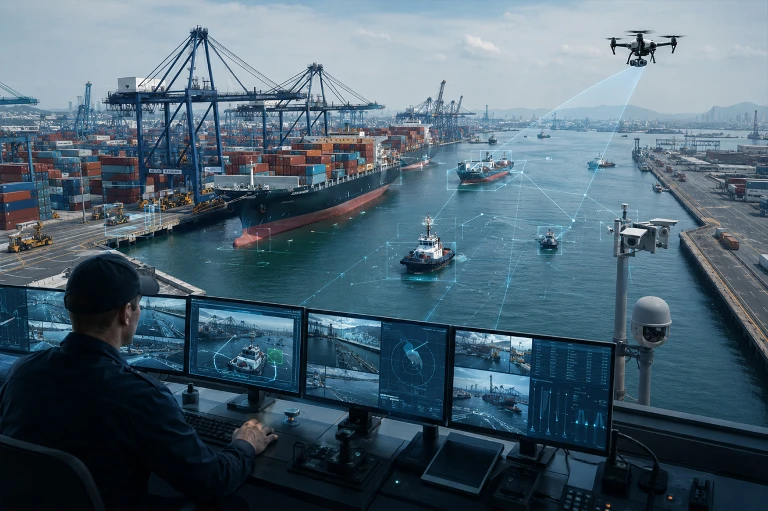
At ports, terminals, and coastal facilities, large areas, changing light conditions, moving cargo, and critical access points are evaluated together. Visible light and thermal cameras, radar, drones, license plate and container information, and access control data can support incident management based on operator verification.
Campus and Corporate Site Security
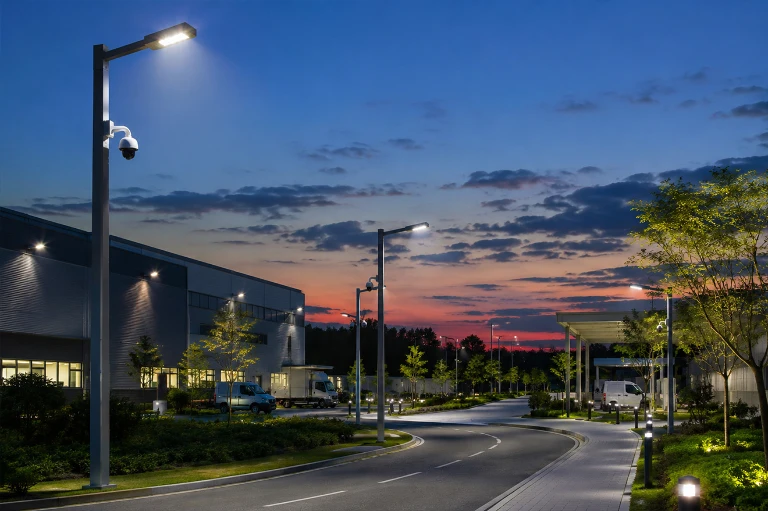
At universities, hospitals, technology parks, and large campuses, multiple buildings, open areas, parking facilities, and pedestrian flows are addressed within a single security model. Emergency call, camera, access control, intercom, and mass notification systems can be integrated with role based authorization and incident procedures.
Logistics Centers and Warehouses
Security and operational data can be correlated across warehouses, loading areas, site gates, and vehicle routes. License plate recognition, video analytics, access control, and work-order integrations support the investigation of loss, damage, unauthorized access, and operational delays.
OT/ICS Cybersecurity
Cybersecurity in operational technology (OT) and industrial control systems should be managed with consideration for production and safety impacts. Rather than directly copying information technology controls, they should be adapted according to asset criticality, operational windows, and safe operating requirements.
- Inventory of OT/IoT assets, software, users, connections, and data flows
- Segmentation between corporate networks, security systems, and control networks
- Approved, time limited, logged, and least privilege access for remote maintenance
- Secure configuration, backup, change, and vulnerability/patch management
- Passive monitoring, incident logging, and physical cyber alarm correlation
- Contractual definition of vendor access, support life cycle, and recovery requirements
Control objectives are defined according to the organization’s risk profile. Frameworks such as NIST CSF 2.0 can be used as references for organizing governance, identification, protection, detection, response, and recovery objectives.
Resilience, Business Continuity, and Disaster Recovery
Critical services should be designed not only for normal operation, but also for scenarios involving the loss of connectivity, power, servers, field devices, or control centers. Based on impact analysis, local operation, redundant recording, alternative communications, backup, and recovery time objectives are defined.
- Analysis of critical functions, dependencies, and acceptable downtime
- Redundancy scenarios at command-center, regional, and edge levels
- Testing of power, network, time source, identity, and cloud dependencies
- Backup, restoration, and post-incident recovery drills
- Maintenance, spare parts, licensing, and support continuity plan
Measurable Project Outcomes
- Incident verification and response time
- System, sensor, and connection availability
- False alarm, missing data, and recurring failure rates
- Energy consumption, maintenance duration, and need for site visits
- Critical service disruption and recovery performance
- User adoption, procedural compliance, and audit findings
Indicators are defined at the beginning of the project with baseline values and targets. Technology performance is evaluated together with infrastructure service quality and social or organizational benefit.
Frequently Asked Questions
A successful smart city project begins with an accurate analysis of existing needs, service objectives, and stakeholders. Existing infrastructure, data sources, and operational processes should be evaluated, followed by the definition of measurable objectives. A small scale yet highly representative pilot implementation is recommended to validate integration and operational processes.
Yes. Existing systems can be assessed in terms of API compatibility, data models, cybersecurity, performance, support life cycle, and capacity to determine which components can continue to be used. New investments can then be planned by starting with the layers that will provide the greatest benefit.
Centralized management platforms can enable different systems to be monitored from a single point. However, the independent and secure operation of each subsystem must be preserved. Authorization, network segmentation, data sharing, and local operation scenarios during connectivity outages are important components of project design.
Because Operational Technology (OT) systems manage physical processes, safety, continuity, and uninterrupted operation are priorities. Therefore, asset inventory management, network segmentation, remote access, patch management, and incident response processes should be planned according to field conditions, rather than following conventional IT security practices without adaptation.