Autonomous Security Patrol, Drone in a Box, and Automated Stations
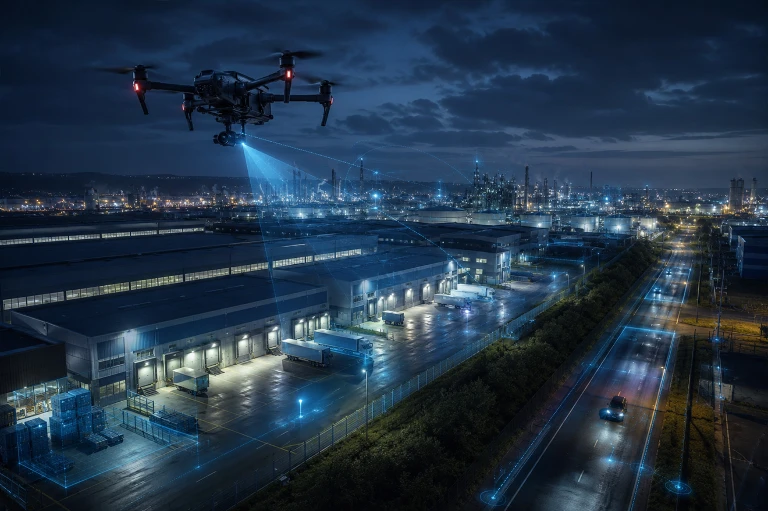
Planned drone patrols based on predefined routes or verified alarm events provide an additional layer of observation for security teams in large areas such as factories, warehouses, power plants, mines, ports, and construction sites.
Live video, location, and flight data can be transmitted to the command center; images and operation records from completed missions can be used later in incident investigation and reporting processes.
- Planned Aerial Surveillance in Large Areas
Autonomous Security Patrol
Scheduled and Operator Controlled Missions
Drone missions can be automatically launched at designated times or manually started by an authorized operator when needed.
Safe Route and Flight Parameters
Geographical boundaries, flight route, mission altitude, speed, safe return points, and emergency behaviors can be predefined according to field conditions.
Live Mission and Telemetry Tracking
Live video, location, altitude, battery status, flight telemetry, and mission progress can be monitored simultaneously through the command center.
Aerial Verification of Alarm Points
After a verified alarm, the drone can be directed to the relevant location to capture live images of the area, allowing the incident to be assessed before dispatching a team to the site.
Mission History and Operation Reports
Mission history, image archives, incident markers, and operation data from completed flights are recorded and can be used in review and reporting processes.
Drone in a Box and Automated Stations
Drone in a box solutions enable the aircraft to wait in a protected station, automatically take off under suitable conditions, perform the mission, return, and recharge. They provide operational standardization for frequently repeated security and inspection tasks in remote locations.
- Station, power, network, positioning, and landing area planning
- Remote mission assignment, route management, and system health monitoring
- Mission blocking rules based on weather and device status
- Central fleet management for multiple stations and aircraft
The goal of uninterrupted operation is evaluated together with the stations environmental durability, backup power, dual communication, maintenance plan, authorized operation window, and emergency procedures.