Biometric Access Systems
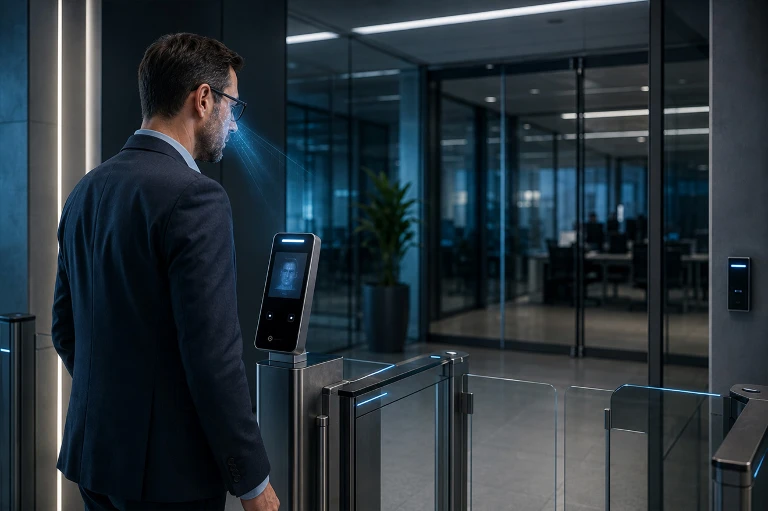
Biometric methods such as fingerprint, face, iris, or palm can be considered as an additional verification layer in selected areas where the risk of sharing access credentials needs to be reduced.
Liveness detection, false acceptance and rejection rates, environmental conditions, accessibility, and alternative access methods are planned together to create an appropriate biometric scenario.
- Advanced Identity Verification Solutions
Biometric Access Systems
Single and Multi-Factor Verification
Depending on the risk level of the area, biometric verification can be applied alone or together with additional methods such as card and PIN.
Contactless and High-Density Access Scenarios
Appropriate biometric methods are determined by analyzing contactless usage requirements and user flow at high-traffic entry points.
Environmental Conditions and Sensor Testing
Verification performance is checked by evaluating sensor angle, light level, masks, gloves, and other environmental conditions through field tests.
Authorized Registration and Template Management
Biometric registration processes are conducted only by authorized users; template security, access permissions, and registration integrity are maintained.
Data Retention and Deletion Processes
Storage durations of biometric data, access logs, deletion upon termination of authorization, and secure destruction processes are defined within the project scope.
KVKK and proportionality note: Biometric data is special category personal data. Purpose of use, legal processing condition, necessity, proportionality, alternative methods, storage, and destruction processes must be evaluated before the project.
Biometrics should not be chosen as the default solution solely for technical convenience, especially for personnel attendance tracking.