Concept Design and System Integration
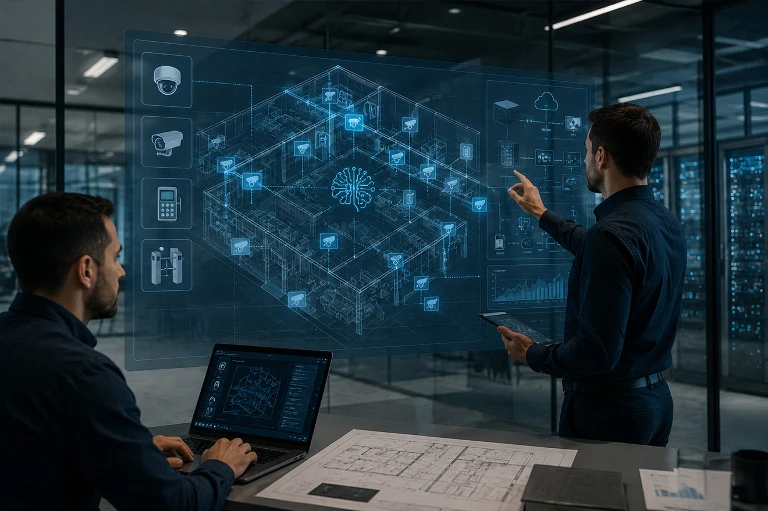
Analysis results are transformed into an actionable project with system topology, device placements, capacity calculations, and integration scenarios.
The design covers not only the initial installation requirement but also growth planning, ease of maintenance, and total cost of ownership.
- Technical Design and Project Planning
Concept Design and Implementation Project
Concept Architecture and System Topology
The concept architecture, system block diagram, and location topology are prepared to define the structure and connections between system components.
Device and Security Point Placements
Camera fields of view, access points, alarm zones, and device placements are determined according to field conditions and security objectives.
Infrastructure and Capacity Calculations
Network, bandwidth, server, storage capacity, and redundancy requirements are calculated based on system performance and business continuity goals.
Technical Specifications and Material List
Product technical specifications, device quantities, software licenses, and necessary material lists are prepared in accordance with the project scope.
Implementation Details and Physical Requirements
Cable routes, mounting details, panel placements, and technical room requirements are defined to guide the implementation process.
System Integration Architecture
Systems such as video management, access control, intrusion detection, fire detection, intercom, and building automation can be integrated within the same alarm and event management layer according to project requirements. Supported APIs, SDKs, drivers, and open standard profiles are used; compatibility is verified not only by product declaration but also by up-to-date documentation and pilot testing.
- Event–action and cause–effect matrix
- API/SDK, device driver, and protocol compliance list
- Common user, alarm, map, video, and reporting workflows
- POS/ERP, visitor management, BMS/SCADA, and business intelligence integrations
- Secure data flow for on-site, hybrid, and cloud components
Open architecture note: Stating that a product supports a standard does not automatically mean all features will work together. Required profiles, versions, licenses, and functions must be checked on a project basis.