What Is a Smart City? How Are the Security Systems of the Future Taking Shape?
A Smart City is not about installing more sensors; it is about creating a data and decision-making infrastructure that enables urban services to be managed more safely, resiliently, and efficiently in line with measurable objectives.
Transportation, energy, the environment, disaster management, and public safety share the same physical space in cities. Despite this, data related to these areas is often stored by different institutions, in different software systems, and through disconnected processes. Before bringing these components onto a single screen, the Smart City approach connects them through shared data models, interoperability, and governance principles. The goal is not to showcase technology, but to deliver sustainable service quality that citizens can experience in their daily lives.
Security is not merely the camera layer of this structure. A traffic accident, infrastructure failure, crowding event, unauthorized entry, fire alarm, or unusual environmental reading must be evaluated together with its location, time, and the services it affects. This allows relevant teams to work from a shared incident record, measure response times, and review the records on which decisions were based after the incident.
- A Data-Driven and Secure City Approach
What Is a Smart City?
A Smart City is a city model that uses digital technologies to improve urban services according to local needs, bases its decisions on reliable data, and measures the resulting outcomes.
In this definition, the word “smart” refers less to automated decision-making and more to the ability to deliver the right information to the right responsible person at the right time. The same technology may serve different priorities in different cities: traffic safety may be the priority in one location, while flood risk, energy efficiency, or the protection of critical facilities may be more important elsewhere.
A successful program clearly establishes the relationship between technology, infrastructure services, and public benefit. For example, intersection analytics should not merely count vehicles; it should be evaluated based on its contribution to objectives such as reducing accident risk, improving travel times, or increasing the reliability of public transportation.
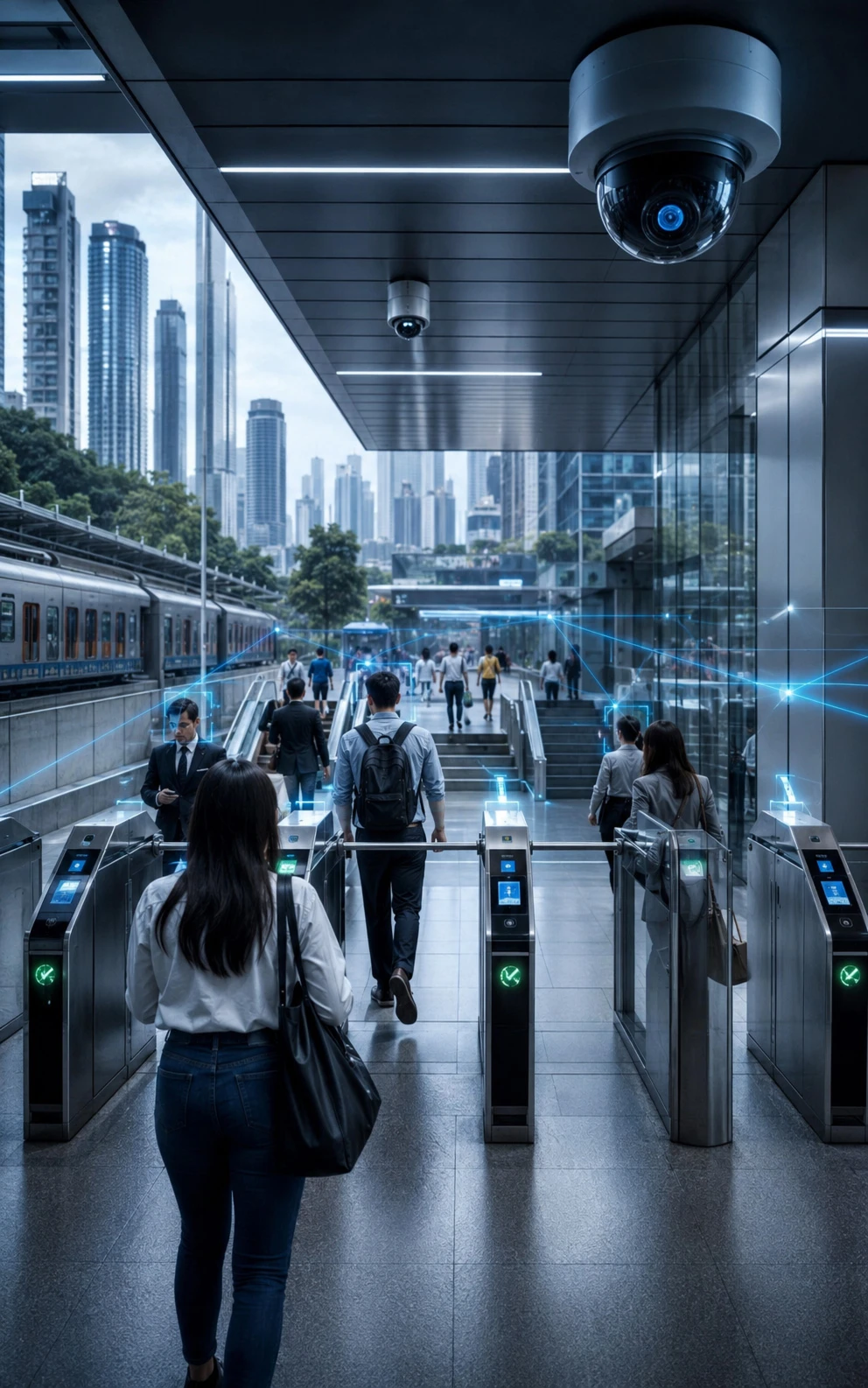
Similarly, a new camera system should be monitored not only based on its ability to produce video, but also through metrics such as verified alarm response time, incident review speed, and system availability.
Service Objective
Technology investments are aligned with the actual problem to be addressed in the city and with measurable service objectives.
Reliable Data
Decision-making processes are based on accurate, current, meaningful data sources with clearly assigned ownership.
Authorized Stakeholders
Institutional roles, authority, data responsibilities, and response procedures are clearly defined at the beginning of the project.
Measurable Outcomes
System success is evaluated not by the number of devices, but by its tangible and measurable contribution to service quality.
Core principle: A Smart City project does not begin with a sensor. The problem to be addressed, authorized stakeholders, success criteria, data ownership, and operating model are defined first; the technology is then selected according to this framework.
- End-to-End System Architecture
The Five Layers of a Secure Smart City
Field and Detection
Cameras, radar, environmental sensors, access control, fire detection, traffic controllers, and similar devices generate the physical context of an incident.
Connectivity and Edge Processing
Fiber, wireless networks, and secure IoT connections transport data; in suitable scenarios, edge devices process data close to its source and reduce the load on central systems.
Data and Integration
APIs, event models, geographic information systems, and supported standards enable different systems to exchange meaningful data.
Operations and Decision Support
VMS, PSIM, GIS, command-and-control, and work order applications transform alarms into verification, assignment, escalation, and reporting workflows.
Governance and Trust
Rules governing authorization, logging, retention, cybersecurity, personal data, vendor management, and business continuity apply across the entire system.
- From Video to Meaningful Event Data
What Does AI-Powered Video Analytics Provide?
AI-powered video analytics classifies people, vehicles, objects, and movement patterns within video to provide operators with search and alarm support.
Scenarios such as restricted-area intrusion, wrong-way movement, unexpected stopping, crowding, abandoned objects, or specific vehicle characteristics can be implemented with compatible cameras and software.
When analytics outputs are associated with metadata such as time, location, and event type, targeted searches within long recordings also become easier.
- Unauthorized entry and perimeter intrusion alerts in critical areas
- Density, direction, and waiting-time analysis for vehicle and pedestrian flows
- Targeted recording searches based on person or vehicle characteristics after an incident
- Support for monitoring protective equipment, secure areas, or operational rules
- Displaying an alarm together with the relevant camera, map, and response procedure
These systems do not “predict incidents with certainty.” Lighting, weather conditions, camera angle, crowd density, video compression level, and training data all affect performance.
For this reason, alarm thresholds should be adjusted using actual site data, false-positive and false-negative results should be measured separately, and critical decisions should be subject to human verification.
Biometric applications such as facial recognition should also be assessed separately in terms of legal basis, necessity, and proportionality, in addition to technical suitability.
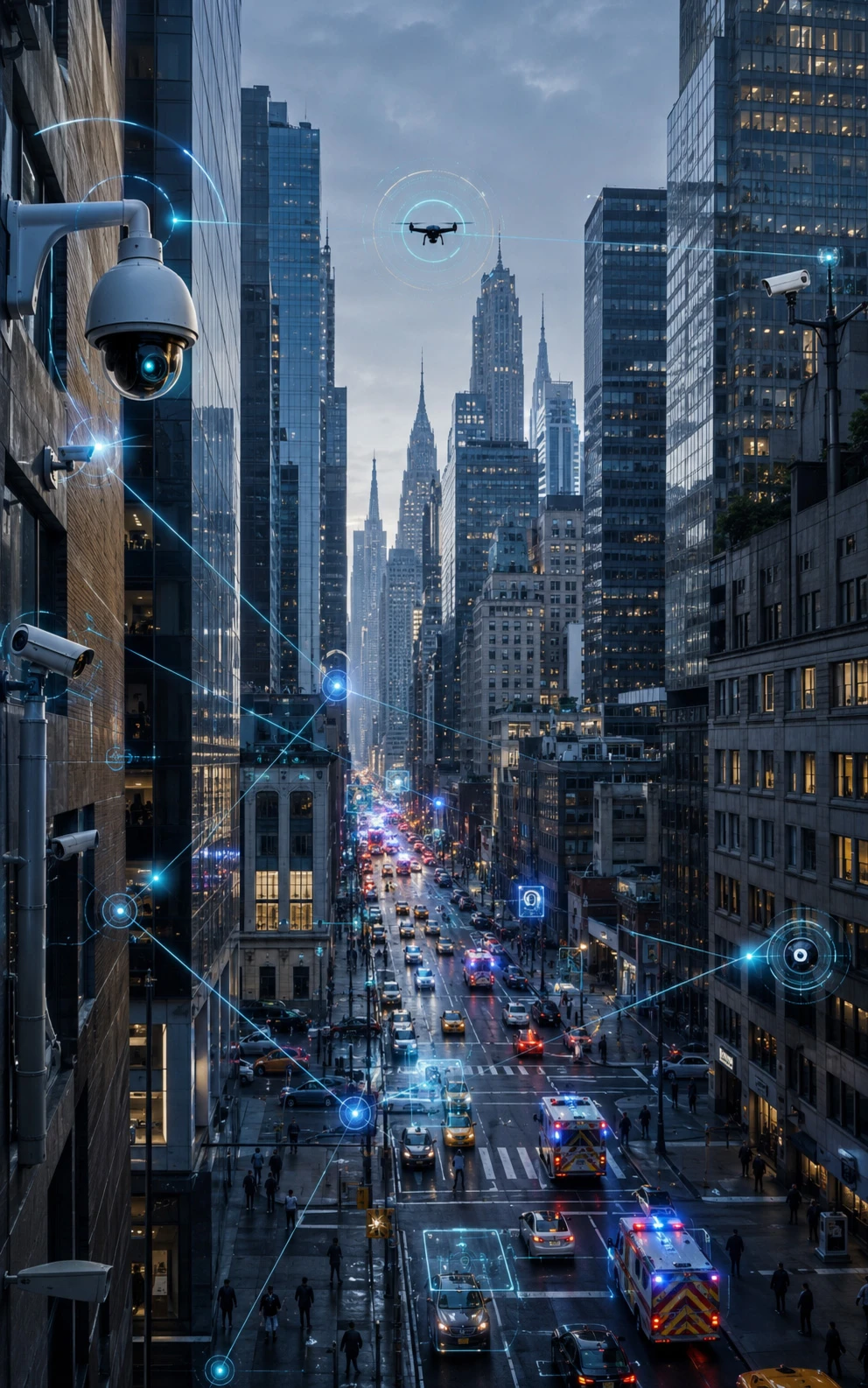
- Common Operational Picture
Integrated Security Operations Center
An integrated operations center does not mean collecting unlimited amounts of data from different institutions. It brings together incident data with defined roles and authority boundaries within a common operational picture.
Camera, license plate recognition, perimeter security, traffic, fire, and infrastructure alarms can be connected to a single incident record with location and priority information. The operator follows verification steps, the field team is assigned, and the beginning and completion times of the response are recorded.
For example, when the water level rises in an underpass, a sensor alarm can display the relevant camera and map location. When a predefined threshold is exceeded, the system can create a work order for the maintenance team and notify the traffic department.
The value here does not come from a single “smart” device; it comes from managing a verified incident through an interagency procedure.
- Safe and Efficient Urban Mobility
Smart Transportation and Public-Space Security
Smart transportation systems bring together functions such as intersection control, public transportation prioritization, road conditions, incident detection, and travel information.
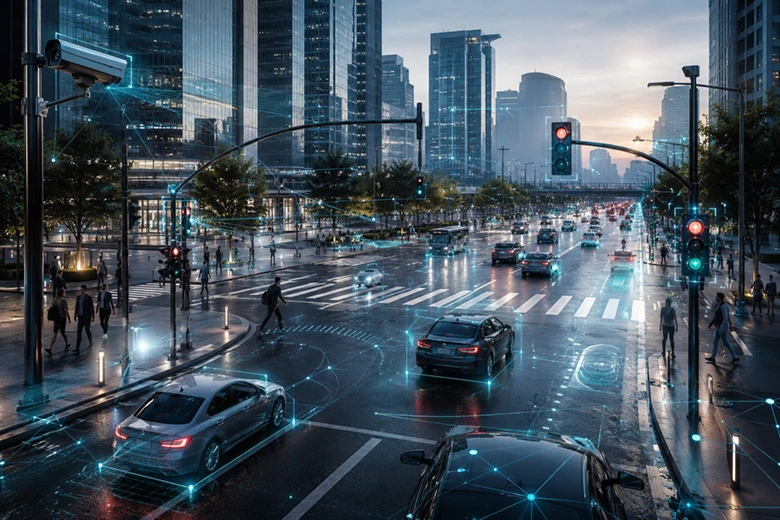
Video analytics and traffic sensors can generate indicators such as queue length, waiting time, lane violations, or unusual stopping. This data can be used not only for signal optimization, but also for pedestrian safety and keeping emergency routes accessible.
In parks, public squares, stations, and pedestrian areas, proportionality in design is important. The field of view, retention period, access permissions, and notification procedures should be aligned with the intended purpose.
A security requirement does not automatically justify unnecessary data collection. Addressing privacy impact during the design phase reduces both legal risk and public distrust of technology.
Critical Infrastructure and Urban Resilience
Energy, water, transportation, communications, and healthcare infrastructure require special protection because uninterrupted service is expected. Physical security, operational technology, and enterprise IT cannot be considered independently in these environments.
An unauthorized entry alarm at a station, unusual network activity, or a failure in field equipment can all affect the continuity of the same service. For this reason, incident classification, backup communications, local operation, power continuity, and disaster recovery scenarios should be tested together.
Resilience does not simply mean installing backup equipment. The system should clearly define which functions will continue locally if the central connection is lost, how synchronization will occur once data connectivity is restored, and who will handle critical alarms within what timeframe.
Tabletop exercises, field tests, and post-incident reviews prevent these plans from remaining only on paper.
- Distributed and Scalable Technology Infrastructure
IoT, Edge Processing, and Interoperability
In urban projects involving large numbers of field devices, continuously sending all data to a central system may result in cost, latency, and bandwidth issues.
Edge processing performs functions such as filtering, event classification, or temporary recording close to the data source. Cloud or centralized platforms can then be used for long-term analytics, multi-site management, and reporting.
On-premises, edge, hybrid, and cloud options should be balanced according to the project's data policies and service-continuity requirements.
Interoperability is not simply about connecting devices to a network. Integration becomes fragile when the data dictionary, time synchronization, event identification, API version, authorization, and error-handling behavior are not defined.
Open interfaces and supported standards can reduce vendor dependency; however, every critical integration should still undergo acceptance testing with actual devices, actual data, and the expected workload.
- Security- and Privacy-Focused Design
Cybersecurity and Personal Data Must Be Incorporated into the Design
Smart City infrastructure creates a broad attack surface. Device inventory, unique identities, secure configuration, network segmentation, update policies, log monitoring, and secure remote access are among the essential controls.
Default passwords, internet-exposed management interfaces, and devices that are no longer supported create risks not only for information security, but also for the continuity of urban services.
For personal data, purpose limitation, data minimization, retention periods, access permissions, and notification obligations should be translated into project requirements.
The reuse of video or location data for different purposes should not be automatically accepted; access and export activities should be logged.
Scenarios involving biometric data require expert evaluation regarding applicable legislation, legal basis, and alternative methods.

- Planning and Implementation Roadmap
How Should a Smart City Security Project Be Planned?
Define the Use Case
Clearly document the problem, service objective, responsible authority, and expected outcome.
Inventory the Existing Infrastructure
Document the status of devices, networks, software, data sources, contracts, licenses, and support arrangements.
Design the Data and Integration Architecture
Determine where each type of data will be processed, with whom it will be shared, and how long it will be retained.
Assess Risk and Privacy Impact
Address cybersecurity, personal data, service interruption, and false-alarm scenarios at the beginning of the project.
Conduct a Pilot Implementation
Test critical scenarios with actual site data under different times, weather conditions, crowd levels, and connectivity conditions.
Quantify Acceptance Criteria
Define targets for availability, alarm verification time, accuracy, latency, and response time.
Establish the Operating Model
Clearly define the system owner, alarm owner, maintenance team, update schedule, and incident escalation process.
- Performance and Service Quality
Which Metrics Should Be Used to Measure Success?
No single indicator can describe an entire project. Technology performance, service quality, and public benefit should be measured as separate layers.
KPIs do not support effective decision-making unless the measurement method, data owner, and baseline value are defined. Depending on the project scope, the appropriate indicators may be selected from the following:
- Availability of the system and critical components
- Time from alarm generation to verification and assignment
- False alarm, missed incident, and manual review rates
- Incident resolution time and compliance with standard procedures
- Camera, sensor, and connectivity health; fault-resolution time
- Service indicators specific to transportation, energy, or environmental use cases
- User satisfaction, accessibility, and privacy complaints
- Future Urban Technologies
Which Trends Are Emerging in 2026 and Beyond?
As of 2026, the focus of the discussion is shifting from deploying more sensors to reliably integrating existing data. Edge AI, event metadata, open integration layers, multi-site management, and digital twins are among the widely discussed project topics.
However, the value of these concepts emerges only when they are connected to a genuine service objective and data quality is maintained.
During the same period, expectations regarding AI governance, cybersecurity, and privacy are also increasing. The ability of institutions to monitor model performance, explain data flows, and maintain human oversight is becoming part of technical specifications.
In other words, the Smart City of the future will be distinguished not only by its level of automation, but also by its accountability, resilience, and manageability.
- Vendor-Independent Engineering Approach
Why iTech Project?
iTech Project evaluates electronic security, AI-powered analytics, communications, software, and field systems within a unified project architecture.
Our work extends from site surveys and risk assessments to integration design, pilot implementation, acceptance testing, and life-cycle support.
Our vendor-independent approach aims to protect existing investments while creating a scalable solution aligned with actual requirements.
Let’s Plan Your Project Together- The Next Step
Let’s Build Your Smart City Security Roadmap Together
Contact iTech Project to identify use cases suited to your city, campus, or critical infrastructure and evaluate your existing systems within a unified roadmap.
Frequently Asked Questions
No. In addition to municipalities, organized industrial zones, campuses, ports, transportation operators, and large facilities can also benefit from similar data, security, and service-management architectures.
Depending on device protocol, version, security, and performance compatibility, part of the existing infrastructure may continue to be used. The final decision should be made after an inventory assessment, compatibility review, and site testing.
No. On-premises, edge, hybrid, or cloud-based architectures may be selected. Data residency, latency, bandwidth, business continuity, and total cost should be evaluated together.
Artificial intelligence supports search, classification, and alarm prioritization. Human responsibility remains essential for evaluating the context of critical incidents and making response decisions.
Laboratory performance may not fully reflect actual lighting, weather, crowd, network, and camera conditions at the site. A pilot implementation tests both technical accuracy and operational processes before the full investment is made.